Why Your Best Leaders Know When to Laugh
Ask most people what resilience looks like in a leader, and they’ll describe grit: gritted teeth, long hours, the willingness to grind through adversity without complaint. It’s not wrong. But it’s incomplete.
The leaders who build teams that actually last — through setbacks, through burnout, through the grind of high-stakes work — have another tool in the kit that rarely makes the leadership seminar slide deck: humor.
The Science Behind the Punchline
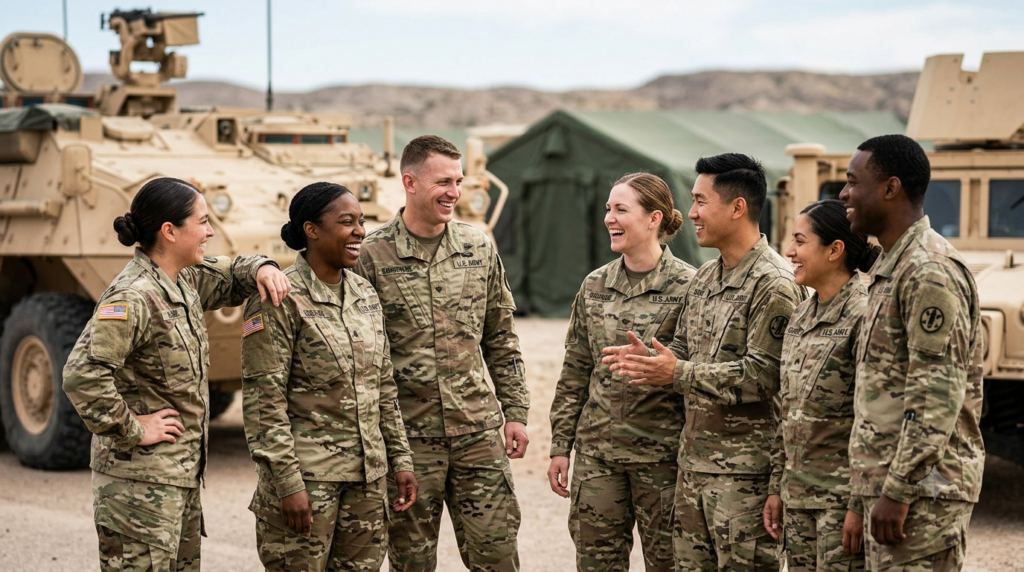
Laughter isn’t just a pleasant byproduct of a good team. It’s a biological mechanism, and a fast one. When tension builds — after a missed deadline, a failed launch, a hard conversation — the body holds onto that stress. Laughter interrupts it. It lowers cortisol, shifts physiological state, and gives a team a genuine, measurable off-ramp from the fight-or-flight loop that setbacks tend to trigger.
This matters more in high-performing environments, not less. The teams under the most pressure are the ones most prone to friction when things go sideways. A missed target doesn’t just cost time — it can quietly erode trust between people who need to rely on each other tomorrow. Humor is one of the fastest tools available for repairing that kind of social damage. Faster than a debrief. Faster than a memo. Sometimes faster than an apology.
Levity Isn’t the Opposite of Seriousness
There’s a common misread here worth naming directly: that a team which laughs together must not be taking its mission seriously enough.
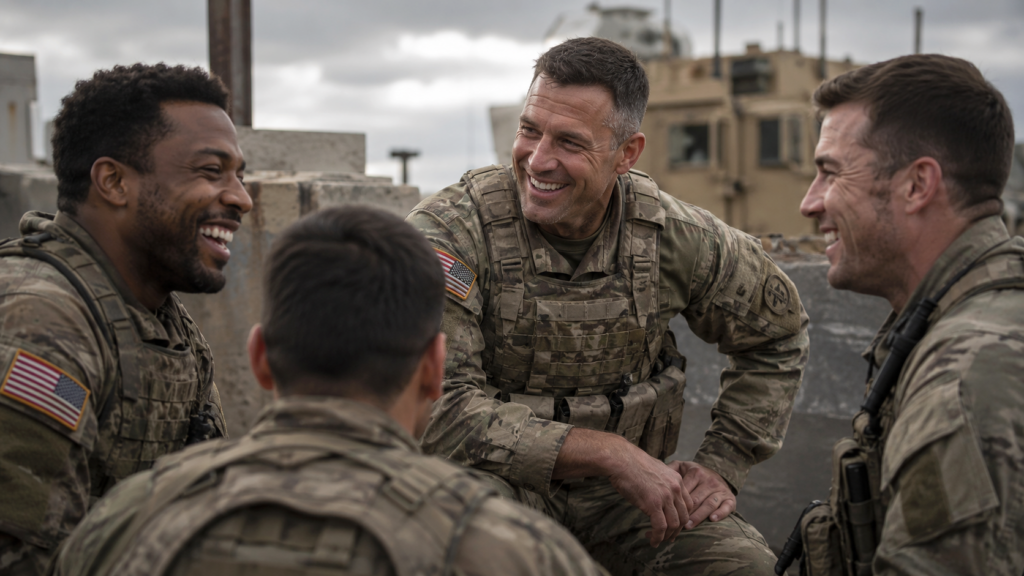
The opposite tends to be true. Cultivating a culture where humor is welcome doesn’t dilute the seriousness of the goal — it strengthens the people pursuing it. A shared joke after a hard week isn’t a distraction from the mission. It’s often what lets people show up for the mission again tomorrow.
This is the difference between grit and what might be called fighting spirit — not just the ability to endure hardship, but the ability to find something worth laughing about in the middle of it. That capacity, more than raw endurance, is what lets teams and organizations absorb pressure over the long haul instead of cracking under it.
What This Looks Like in Practice
For leaders, this isn’t about becoming the office comedian. It’s about recognizing the moments when a lighter perspective does more good than another push for execution.
A few ways this shows up:
- After a setback, instead of moving straight into a post-mortem, leave room for a moment of genuine lightness before diving into the lessons learned.
- In friction between team members, a well-placed, kind moment of humor can lower defensive walls faster than a mediated conversation.
- In day-to-day interactions, small, consistent moments of levity signal to a team that it’s safe to be human here — not just productive.
None of this replaces the hard work of leadership: setting direction, holding standards, driving execution when it’s needed. But knowing when to step back and enjoy the journey is its own leadership skill, not a break from one.
The Takeaway
Long-term, sustainable success isn’t built by teams that never feel pressure. It’s built by teams that know how to metabolize it — and humor is one of the most effective, most human tools available for doing that.
Bring a little more levity into your interactions this week. Watch what it does to engagement, to morale, and to the willingness of your people to show up fully for the hard work ahead.